Author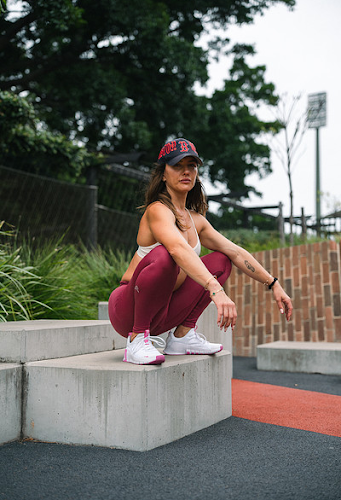
There’s an assumption built into the way most high-performing people think about their physical training. It’s separate. It’s scheduled. It’s the thing that happens before the real day begins, or after it ends, or on the weekend when there’s finally time. It’s maintenance work on the vehicle that carries the important stuff — the decisions, the relationships, the output, the ambition. Vanja, founder of Moves Method and movement educator to over 180,000 students across 45 countries, thinks this framing is not just limiting. She knows it from the inside, a former professional tennis player who trained under world-class coaches and rebuilt her own body before building a methodology around what actually worked.
Her position is less comfortable than it sounds: movement isn’t a supplement to a well-lived life. It’s the substrate of one. And the people who treat it as optional are making a trade they don’t fully understand yet.
The performance paradox
The archetype Vanja encounters most often isn’t someone who has given up on their body. It’s someone who is succeeding at everything except the relationship between their physical state and everything else they’re trying to do. They’re running companies, raising families, competing at high levels in their field. They’re also waking up stiff, managing chronic pain, scheduled into their physio the way they’re scheduled into their accountant, and quietly accepting that this is the cost of operating at the level they operate at.
It isn’t, she argues. It’s the cost of operating at that level while treating the physical body as a system to be managed rather than a capacity to be built.
“The body isn’t the vehicle for the work. It is the work. The state of it determines the quality of everything else — the clarity, the resilience, the ability to stay in the room under pressure. People optimise everything except the thing that runs all of it.”
The leaders and performers she works with who make the shift — who stop treating movement as scheduled maintenance and start treating it as the foundation — report changes that have nothing to do with aesthetics. They sleep differently. They think differently. They handle pressure differently. The physical training didn’t improve their leadership. It revealed what leadership was sitting on top of.
Why the body is the first system
Vanja’s argument isn’t metaphorical. It’s structural. A body that can’t breathe well under load can’t regulate the nervous system under stress. A body that has chronic pain is running a constant low-level threat signal that competes with every decision being made. A body that can’t move freely is a body spending cognitive resources on physical management — the back that needs to be positioned carefully, the hip that flares up on long flights, the shoulder that limits how long someone can sit at a desk without compensating somewhere else.
None of this is visible on the outside. The person still shows up. They still perform. But they’re performing with a significant portion of their system occupied by physical noise they’ve normalised to the point of invisibility.
“Most people have no idea how much of their bandwidth their body is consuming. They’ve been managing it for so long they think the managed version is just how they function. It isn’t. It’s how they function with the handbrake on.”
Remove the physical noise — through movement that actually resolves restriction rather than managing it — and what comes back is access to a quality of presence that chronic physical load had been quietly taxing for years. It’s not a small thing. In Vanja’s view, it’s the leverage point most high performers have never touched.
What longevity actually requires
The longevity conversation in performance culture tends to stay abstract. Rest more. Recover better. Don’t burn out. What Vanja is talking about is more concrete and more demanding: the body someone will have at 70 is being built right now, in the ranges they’re loading and the ones they’re abandoning, the positions they’re training through and the ones they’re routing around.
Longevity isn’t something that happens to the disciplined. It’s something that’s constructed, deliberately, through the physical decisions made across decades. And the decisions most people are making — training inside a narrow corridor, avoiding restricted positions, treating mobility as an afterthought — are building a specific kind of 70-year-old body. One that works in the gym and not much else.
“I’m not interested in helping someone perform well at 45 and fall apart at 60. The goal is a body that compounds. That gets more capable, not less. That’s not a genetic gift — it’s a training choice made early enough to matter.”
The practical implication is that training for longevity looks different from training for performance metrics. It’s less interested in how much someone lifted last week and more interested in whether they can still sit in a deep squat, hang from a bar, get up from the floor in any direction, rotate under load, and move through positions that modern life has been quietly removing from the repertoire for twenty years.
Movement as identity, not schedule
The reframe Vanja returns to most often is the distinction between movement as something you do and movement as something you are. In her methodology, and in her own life, movement isn’t scheduled the way a workout is scheduled. It’s ambient. It’s continuous. It’s in how she sits, how she rests, how she moves through the environment, how she thinks about the body’s relationship to space at every hour of the day — not just the hour set aside for training.
This isn’t an aesthetic choice. It’s a philosophical one with practical consequences. A person who moves through their whole day is accumulating physical input that a person who sits for eight hours and trains for one never accesses. The joints get loaded in varied positions. The nervous system gets stimulated in non-linear patterns. The body stays warm, fluid, and responsive in a way that a single training session followed by prolonged stillness simply doesn’t replicate.
“Movement is not exercise. Exercise is one hour. Movement is everything between the hours. The people who understand that distinction are building a completely different body than the ones who don’t.”
What she’s describing, ultimately, is an identity shift. From someone who trains to someone who moves. It’s a harder ask than a program. It’s also the only version, she argues, that actually works.
The thing that runs everything else
Vanja’s clients who make this shift don’t describe it as getting fitter. They describe it as getting back something they didn’t know they’d lost. Clarity that had been blunted. Energy that had been taxed. A quality of presence in their own body and in the rooms they occupy that chronic physical management had been slowly withdrawing.
Movement, she says, is the catalyst not because it’s a metaphor for discipline or resilience or any of the things the wellness industry likes to attach to physical training. It’s the catalyst because it is, literally, the condition under which everything else functions better. The leadership. The longevity. The relationships. The output. All of it runs on the physical substrate. All of it is affected by its state.
The body someone is living in right now is either supporting what they’re trying to build or quietly taxing it. There is no neutral position. Every day the physical system is either being invested in or drawn down from, and the account, unlike most others, doesn’t recover easily once it’s overdrawn.
Most people, Vanja says, don’t find this out until they’re already in deficit. The ones who do find out earlier tend to make the same discovery: the thing they thought was separate from the work was, the whole time, the thing the work was running on.
This article was published on Diet & Fitness For All