Headlines Team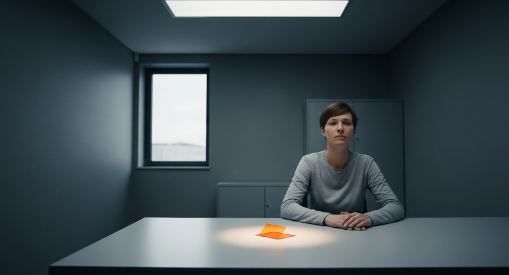
We are sold a narrative about addiction recovery that looks like a straight line. It goes: You hit rock bottom, you go to a doctor, you get the medicine, and you get your life back. It is a clean, sterile story for a messy, dirty disease.
But my story wasn’t a line. It was a spiral.
For five years, I fought a war against my own biology. It started with heroin—a chaotic, terrifying love affair that stripped me of my dignity, my money, and my trust in myself. But the true darkness didn’t settle in when I was buying bags on street corners. The true darkness arrived when I walked into a clinic, sat in a comfortable chair, and was handed a prescription for Suboxone.
This is the story of how I tried to save my life, only to find myself trapping it in a different kind of cage. This is the reality of trading one master for another.
The Heroin Haze
My descent into heroin addiction was standard. It wasn’t glamorous. It was a slow erosion of the soul. Heroin is a thief; it takes your ambition, your relationships, and eventually, your will to live. But heroin is also an honest thief. You know it’s killing you. You know the needle is the enemy. There is no pretense of “wellness” when you are nodding off in a gas station bathroom.
After years of this hell, I was desperate. I was five years deep into a substance abuse battle that felt like it would only end in a casket. I wanted out. I wanted to be a functioning member of society again.
So, I sought help. I entered a Medication-Assisted Treatment (MAT) program. I was told that Suboxone (buprenorphine/naloxone) was the gold standard. It was the “miracle” that would curb the cravings, block the receptors, and allow me to live a normal life.
I thought I was being thrown a life raft. I didn’t realize I was being shackled to the boat.
The Honeymoon Phase
For the first few months, it worked. The chaos stopped. I wasn’t sick every morning. I wasn’t chasing a dealer. I got a job. I reconnected with family. On the surface, I was a success story.
But chemically, something else was happening. Suboxone binds to the opioid receptors in the brain with a ferocity that is stronger than heroin. It has an incredibly long half-life. While I wasn’t “high,” my brain was still saturated with opioids. I wasn’t healing my neurochemistry; I was putting it in a state of suspended animation.
The Two-Year Fog
The two-year dependency that followed is a blur of grey. That is the only way I can describe it. Heroin was black and white—extreme highs and terrifying lows. Suboxone was just… grey.
Slowly, the lights in my personality began to dim. I lost my libido. I lost my ability to laugh belly laughs. I lost my ability to cry. I was existing, functioning, and working, but I wasn’t living. I was a high-functioning zombie.
Then came the side effects that the brochures don’t emphasize. The severe constipation, the dental issues from the acidic film, the lethargy that no amount of coffee could touch. But the worst side effect was the mental anguish.
The Descent into Darkness
Around the one-year mark of my Suboxone treatment, a profound depression set in. It wasn’t just sadness; it was a chemical desolation.
I began to have suicidal thoughts. This was baffling to me because, on paper, my life was getting better. I had money in the bank. I had a roof over my head. Why did I want to die more now than when I was sleeping in my car?
I realized later that I was experiencing a spiritual and emotional claustrophobia. I felt trapped. I knew that if I missed a dose, the withdrawal would set in—and Suboxone withdrawal is a beast entirely different from heroin. Heroin withdrawal is a violent, flu-like sprint that lasts a week. Suboxone withdrawal is a marathon of restless legs, insomnia, and panic that can last for a month.
I felt like I had signed a contract with the devil in invisible ink. I had traded an illegal addiction for a legal dependency, and the legal one felt harder to break. The doctors told me I needed to stay on it to be safe. They told me I might need to be on it for life.
Hearing that felt like a prison sentence. The despair of being tethered to a pharmacy, of knowing my “sobriety” was contingent on a daily orange strip, drove me to the edge.
The Battle for Release
The fragility of life becomes very apparent when you are fighting your own chemistry. There were nights I lay in bed, staring at the ceiling, wondering if this was it. I wondered if I had permanently broken my brain.
Trying to get off Suboxone was the hardest thing I have ever done. Harder than quitting heroin. Harder than quitting cigarettes.
I tried to taper. I tried to jump off at 2mg. I failed. The physical agony was unbearable, but the mental game was worse. The anxiety that flooded back was catastrophic. I would make it three days, then crawl back to the clinic, weeping, begging for relief. This cycle repeated for months.
It took a level of grit I didn’t know I possessed to finally break free. It required a slow, microscopic taper that took almost a year. It required finding a doctor who actually listened to me—one who understood that I didn’t want to be “maintained,” I wanted to be cured.
The Fragility of Life
I am sharing this not to scare people away from seeking help. For some, long-term maintenance is the only thing standing between them and an overdose. I respect that.
But I am sharing this to validate the people who are currently in the grey fog. The ones who feel ungrateful because they are “clean” but still miserable. The ones who feel like they traded a fast death for a slow one.
My journey revealed the terrifying fragility of the human spirit when it is chemically suppressed. It taught me that there is no magic pill for the trauma and pain that drives addiction.
I survived. I made it to the other side of the Suboxone withdrawal, and eventually, the color returned to the world. I felt joy again. I felt pain again. I felt real again.
If you are in the depths of this battle, know that you are not crazy. The struggle you feel—the desperation, the darkness, the feeling of being trapped—is real. But it is also resolvable. It requires a fight, and it might be the hardest fight of your life, but reclaiming your autonomy is worth every drop of sweat and every tear.
We are fragile, yes. But we are also unbreakable if we refuse to give up on the hope of true freedom.